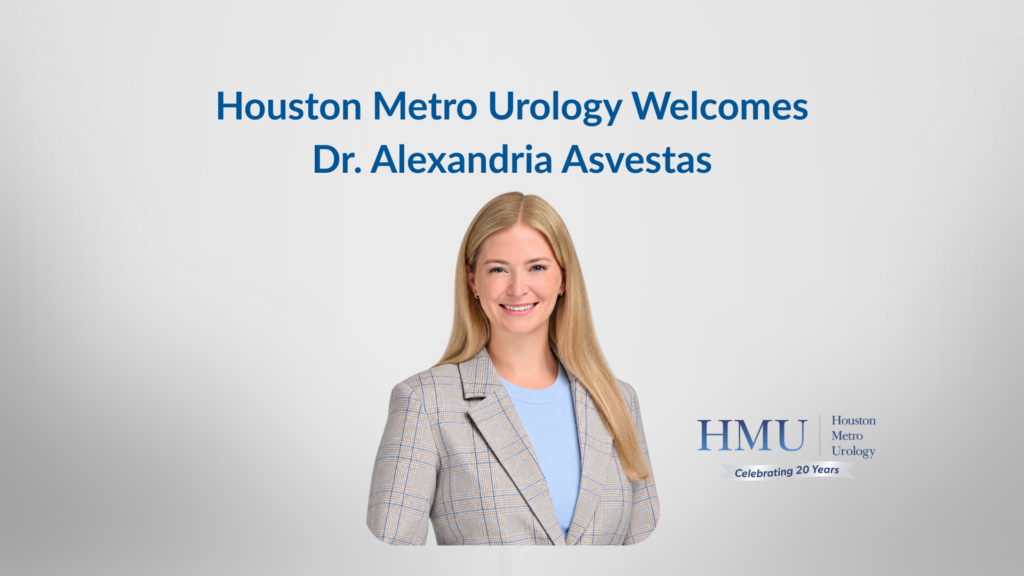


























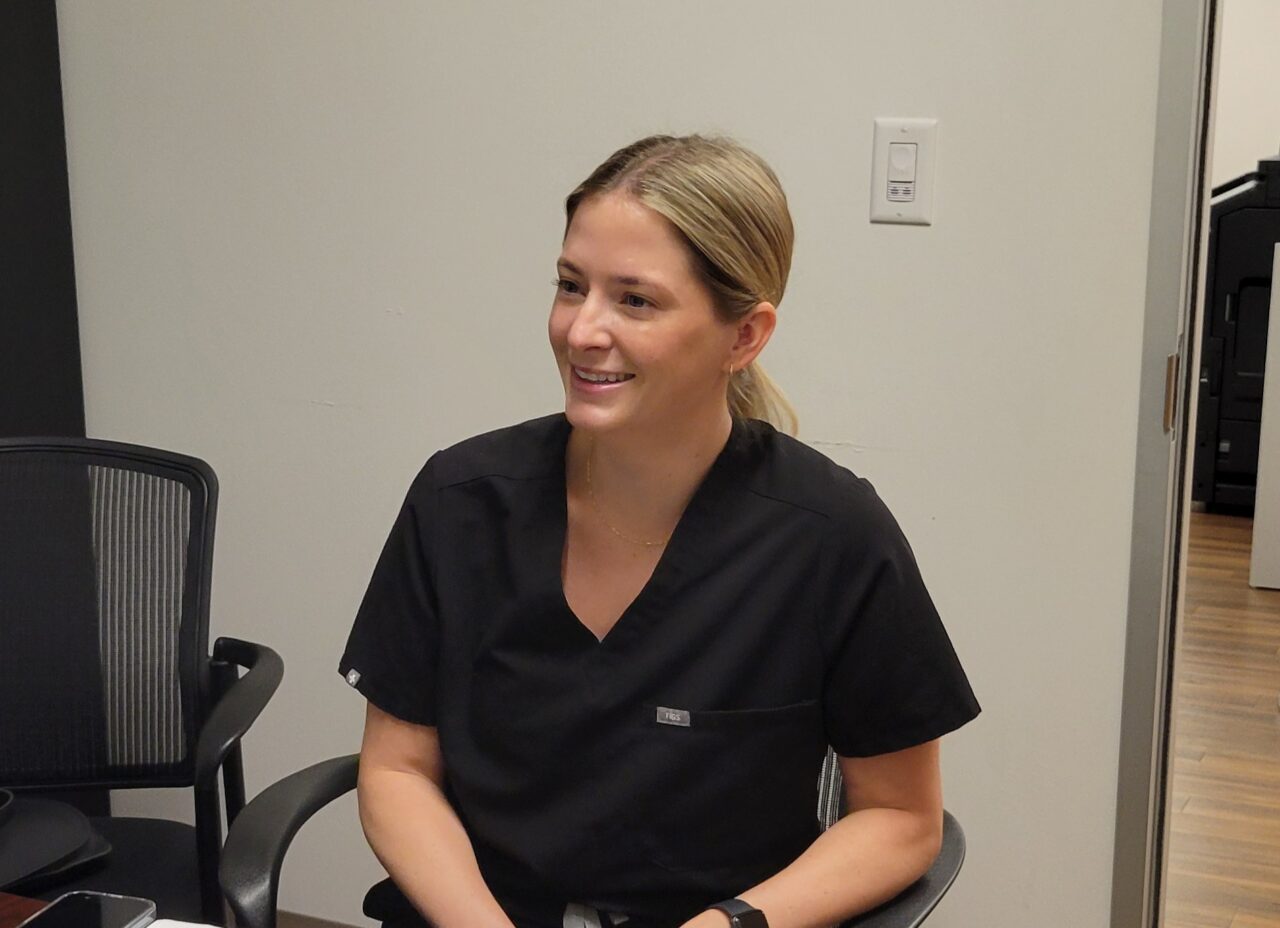
Dr. Asvestas can help patients find relief from nephrolithiasis, or kidney stones
Patients often come to Houston Metro Urology seeking relief from nephrolithiasis. Also referred to as kidney stones, this painful condition is very common in Texas. This is due in part to dehydration and the typical Southern diet. The good news is that Dr. Alexandria Asvestas is an expert at treating kidney stones.
How does Dr. Asvestas approach treating kidney stones?
Dr. Asvestas explains that kidney stone treatment varies depending on the size and location of the stones.
Many small kidney stones don’t require treatment. It is often possible to pass a small stone at home by drinking lots of water (up to two to three quarts per day) and taking over-the-counter pain relievers, such as Advil or Aleve.
However, when nephrolithiasis causes large stones or kidney stones that cause symptoms, Dr. Asvestas offers several advanced, minimally invasive treatments. These options for treating kidney stones include:
- Shock wave lithotripsy can use shock waves to break the kidney stones into smaller pieces that you can pass later when urinating.
- Ureteroscopy uses a specialized tool to see inside the urinary tract. After locating the stone, our Houston urologist can remove it and break it into smaller pieces.
- Laser lithotripsy breaks up the kidney stones using a laser. These smaller pieces can be removed by Dr. Asvestas or exit the body during urination later.
If you’re dealing with these painful stones, Dr. Asvestas can meet with you to determine which of these treatments is right for you.
Why is Dr. Asvestas passionate about helping patients with nephrolithiasis?
While kidney stones aren’t life-threatening, they can be incredibly painful and disruptive. This Houston urologist finds it rewarding to help people find relief from this condition and get back to their everyday lives.
If you need treatment for kidney stones, Dr. Asvestas is now accepting new patients. We invite you to contact us today to schedule an appointment.